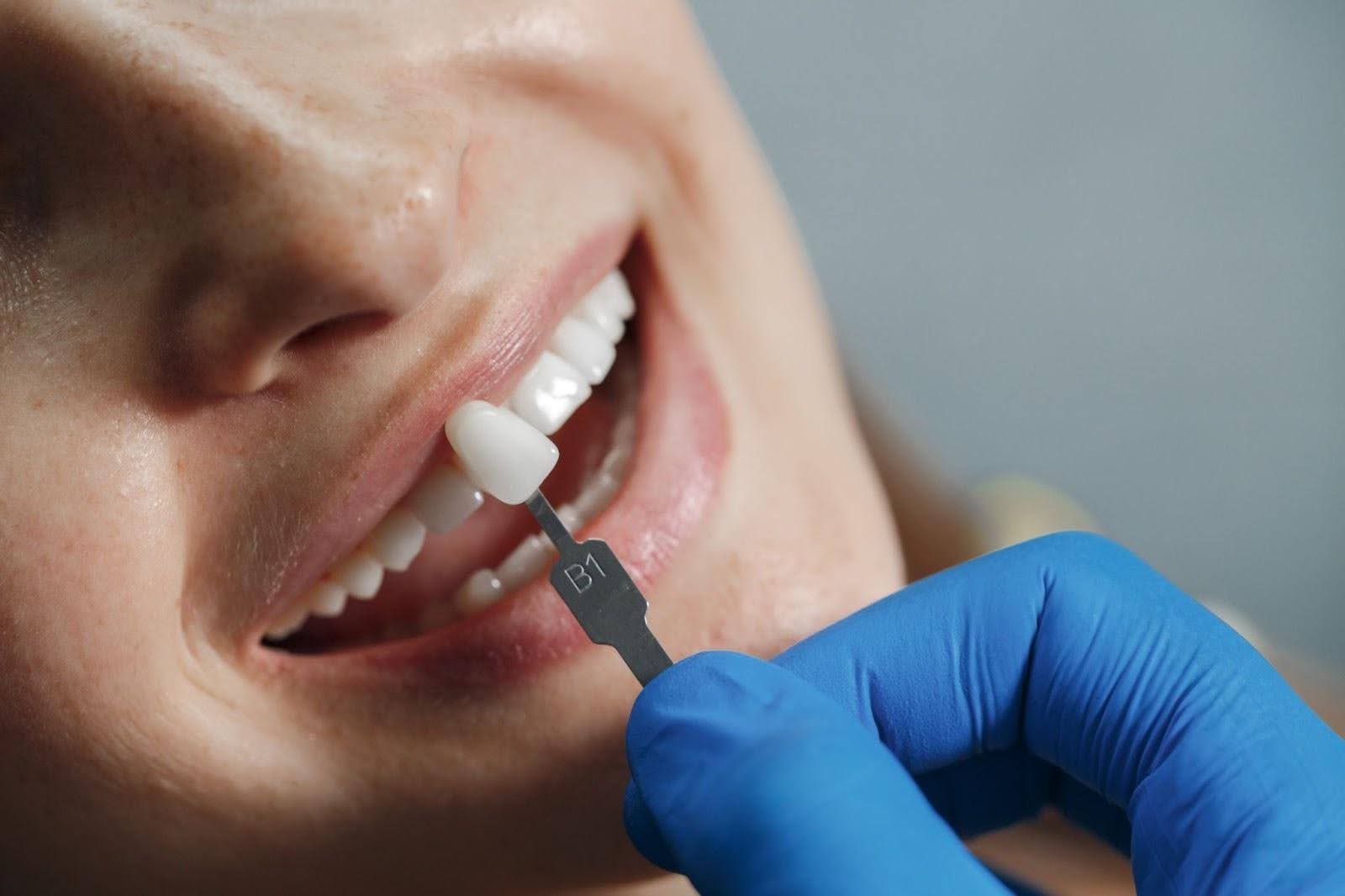
Veneers are thin shells of composite resin or porcelain, bonded to the front of your teeth to cover chips, small gaps, stains or slightly uneven teeth. At a consultation your dentist tells you whether they suit you.
1ConsultationYour dentist checks your teeth, gums and bite, talks through your goals and explains composite and porcelain veneers.
2Plan and quoteYou receive a treatment plan and a personalised quote, and choose the shade and shape with your dentist.
3Preparation and fittingComposite veneers are shaped on your teeth and polished. Porcelain veneers need a thin layer of enamel removed, then they are made to fit and bonded at a later visit.
4Review and careA check after fitting, then regular check-ups and cleaning to look after your veneers.
Composite or porcelain?
Composite
Tooth-coloured resin shaped directly on your teeth, usually with little or no removal of enamel. Costs less, and can usually be repaired or added to.
Porcelain
Made to fit your teeth and bonded at a later visit, after a thin layer of enamel is removed, which cannot be undone. Generally more stain-resistant, and tends to last longer.
Your dentist advises which suits your teeth.
Good to know
Veneers are priced per tooth: your total depends on the material and how many teeth are treated, confirmed after assessment.
Decay or gum disease is treated before veneers.
Veneers can chip: avoid biting hard objects, and wear a night guard if you grind your teeth.
We take card instalments and Atome.
Questions about dental veneers
What are veneers, and how do they work?
Veneers are thin shells bonded to the front surface of your teeth to improve their colour, shape and appearance. They can cover or improve discolouration, chips, gaps or slightly uneven teeth. There are two main kinds: composite veneers, shaped from tooth-coloured resin directly on your teeth, and porcelain veneers, made to fit your teeth and bonded at a later visit.
Composite or porcelain: which should I choose?
Composite veneers cost less and can usually be repaired or added to. Porcelain is generally more stain-resistant and tends to last longer. Your dentist explains the options for your teeth and goals, and recommends the one that suits you.
How long do veneers last?
It depends on the material, your bite and how you care for them. Composite veneers usually need repairs or replacement sooner than porcelain. Avoiding biting hard objects, wearing a night guard if you grind your teeth, and regular check-ups help them last. Your dentist explains what to expect for your teeth.
Are veneers painful?
Porcelain veneers usually need a thin layer of enamel removed, which cannot be undone. A local anaesthetic can be used. Composite veneers often need little or no removal of enamel. Some people have short-lived sensitivity afterwards. Your dentist explains what your treatment involves before you start.
How do I find out whether veneers suit me?
Veneers may suit you if you want to improve chips, gaps, stains or slightly uneven teeth, and your teeth and gums are healthy: decay or gum disease is treated first. Book a consultation so the dentist can assess your teeth, discuss your goals and explain appropriate options.
How much do veneers cost?
Composite veneers are RM250 per tooth and porcelain veneers RM1,500 per tooth. How many teeth are treated, and any preparation they need, is confirmed at your consultation, where your dentist gives you a personalised quote. We take card instalments and Atome.
Why patients choose us
Care you can check
Dr KamsiahProsthodontist · BDS, MDSc (University of Malaya)